Whisky Drunk

In high school, to be “whisky drunk” was to be ready for a fight. 

It was a quick shorthand to say someone drunk was easily riled or ornery, and it meant to steer clear or be prepared to throw fists.

Whisky’s predisposition to incite violence in my high school stemmed largely from the over consumption of Canadian Club, a drink that was easily procured from the LCBO thanks to its slim glass mickey bottles that fit easily inside a coat or a cargo pocket and thanks largely to one intrepid individual’s — let’s call him Tank — proclivity for stealing these bottles and selling them cheaply to the student body. Tank was essentially the embodiment of “whisky drunk” and if you weren’t in the market for a bottle of CC or a fight, you had little reason to interact with him. 

These days, of course, I understand more clearly that what we called whisky drunk then was in fact “rye drunk,” a distinct and mean state of intoxication unlike any other. 

And unless of course you’ve been Rye Drunk, you might think I’m being facetious to suggest the consumption of whisky can result in a unique state of drunkenness, but it’s true. To drink a glass of whisky is of course a fine thing. At the end of a long day, pouring oneself a glass of something smooth, deep, and brown is a reliable and soothing —if not altogether healthy — balm for what ails. A glass of whisky is indeed a thing to savour, ponder, and enjoy.  

But to be drunk exclusively on whisky is another thing altogether. 

It’s an irresponsible and dangerous endeavour and each strain of whisky comes with its own distinct hazards.

As already mentioned, rye is a mean drunk. It lights a fire in the belly that can only be extinguished by lashing out at others. At best, rye will have you cursing at family and friends and maybe putting your foot through an aquarium. At worst it’ll have you waking up on a boulevard to the sound of 5am garbage trucks, knuckles bloodied and face swollen. 

But a Bourbon Drunk is something else. A man who enjoys the odd glass of bourbon is a relatively common and harmless thing, but a man drunk off bourbon exclusively is a lecherous, handsy, terror. Too much bourbon — collected, catalogued and fawned over — is the stuff of braggadocios business men. And a Bourbon Drunk lends itself to a sort of dangerously amorous and boastful confidence; the stuff of glassy-eyed men in synthetic polos making a pass at a much-too-young waitress after a day at the trade show. It’s something in the corn, they say. 

And Scotch Drunk isn’t any better. Even more so than bourbon, scotch is fetishized and hunted like big game; the exorbitant price tag just another part of the experience to brag about. And so someone willing to imbibe a good Islay single malt to the point of intoxication is essentially a sociopath and is to be avoided at all costs. To consume to excess this expensive and rare thing designed to savour is to truly not give a fuck. As a result, Scotch Drunk lends itself to feeling entitled and untouchable and so a wanton disregard for decorum and laws is inevitable. Scotch Drunk leads to things like running over a cyclist on the way home from the tennis club, telling a cashier you could have them killed, or tearing up a neighbour’s garden and then screaming that it’s fine because your cousin is a judge. Scotch Drunk is arguably the scariest of them all, but to be fair, it’s usually the best dressed so it can be tough to spot. 

As for Irish Whiskey, it’s best to just steer clear of it altogether. Even trace amounts of Irish whiskey can lead to Donegal tweed, gentle weeping and satirical poetry. 

So enjoy your whisky, by all means. Just be careful. 

This post originally appeared in the October 2025 edition of Spent Grains, “A little zine about beer and stuff in Toronto.” You can access current and past web and print versions of the zine here.

Russian pepper shots

This is a true story.

I used to work in bars and restaurants when I was in university.

My longest tenure at any one place was at a divey bar attached to a Howard Johnson near the 401 here in London. It was called The Black Pint and, at one point, it had been someone’s attempt at a quaint Irish Pub. By the time I arrived, however, The Black Pint’s best days were behind it, though it still did a pretty lively business on weekends, patronized by an eclectic mix of musicians, bikers, and whomever was staying in the adjacent HoJo—then the lowest cost accommodations in that part of town (now torn down to make way for The Keg). Fights were not uncommon at The Black Pint. A jealous member of a famous motorcycle club had once put three of our regular customers in the hospital. It was not without a certain charm. 

In an ill-advised attempt to save the business at a time when it seemed like most of our customers were only there to fight each other and most of the employees were only there to steal and/or get fucked up on the job, the business was sold to new owners who, for some reason, thought it might make a good spot for a family restaurant. Accordingly, they re-branded the place “The Wobbly Penguin” and started serving brunch. It was every bit as bleak as you might imagine and most of our customers and staff fled the place like rats on a sinking ship, but for some reason I stuck around. Continue reading “Russian pepper shots”

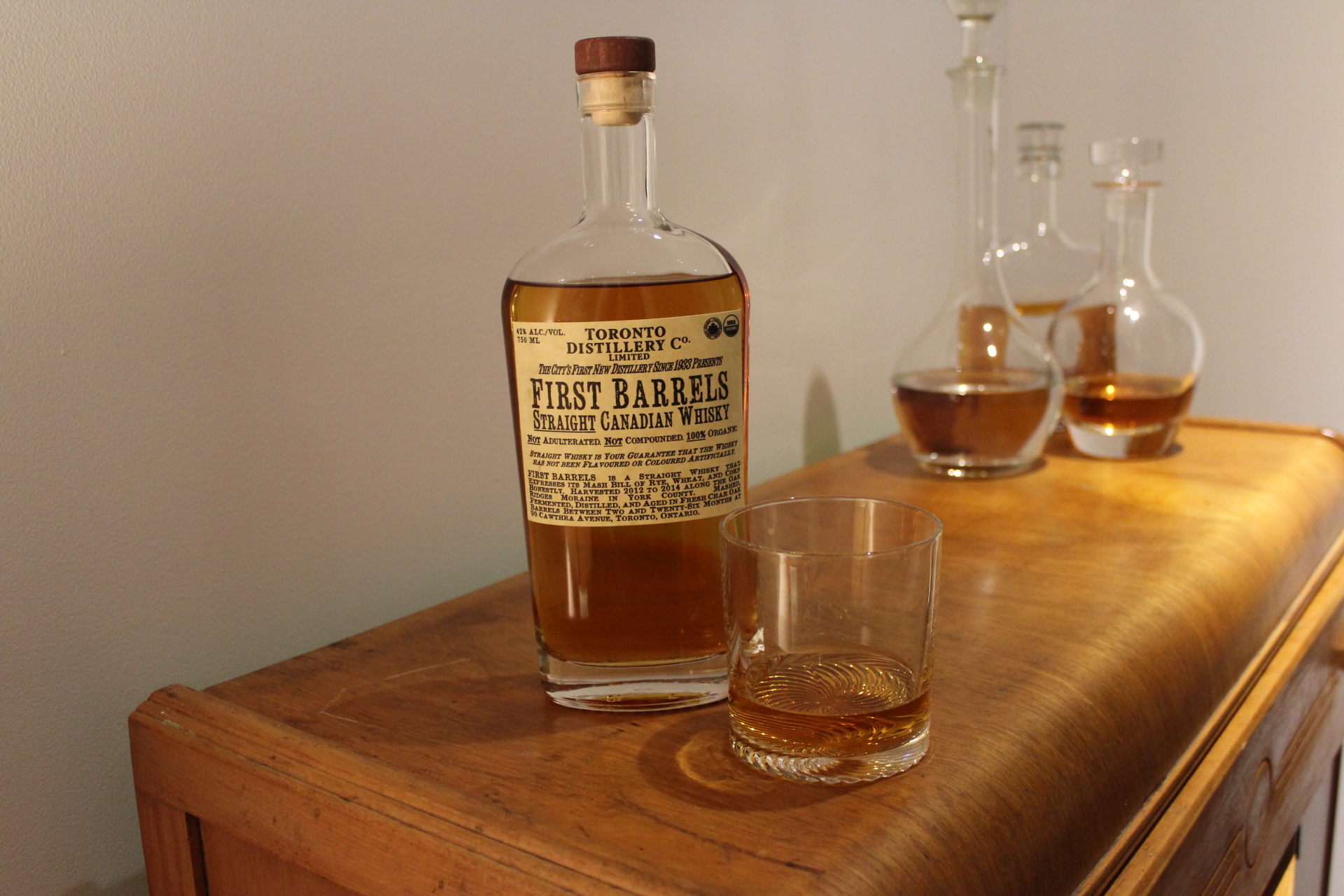
The “straight” goods: Toronto Distillery Co.’s First Barrels Whisky

img_9646

The first new distillery in Toronto since 1933 has just launched the city’s first 100% organic whisky, and in addition to bringing about “the rebirth of whisky distilling in one of the historically great whisky cities of the world,” its makers are hoping the bottle and its contents might start a conversation about whisky standards in Canada.

Launched in 2013 by Charles Benoit and Jess Razaqpur, the Toronto Distillery Co. was borne of two high school buddies’ shared passion for whisky. Given the requirement for whisky to age, the start-up company located in the Junction (directly next door to Junction Craft Brewing) has, like most new distillers, largely been selling organic gin and “new make” grain spirits, an unaged whisky that you might know by the less refined moniker “moonshine.”

Until now. Continue reading “The “straight” goods: Toronto Distillery Co.’s First Barrels Whisky”

Someone put hops in my whisky

This article ran on Post City’s website as “JP Wiser’s new Hopped brings the characteristics of beer to a bottle of whisky” on October 8, 2015. 

wisershopped-7b0e2320

It was probably inevitable that, as interest in hop-forward craft beers rose at the same time there has been a renewed interest in whisky and dark spirits, that there would be an increase in attempts to market some combination of the two.

For the most part, outside of my own proclivity for pouring a few fingers of whisky alongside a pint of beer, this marriage has come by way of beers that attempt to bring you the flavour of whisky. Sometimes it works, as when Chicago’s Goose Island ages a stout in bourbon barrels to make the spectacular Bourbon County Stout—arguably the beer that started craft beer’s barrel-aging trend. And other times, as in the dreadful English import Old Crow, which is essentially a lager with a shot of bourbon flavour, it most certainly does not work.

There have, however, been few attempts to bring the characteristics of beer to a bottle of whisky.

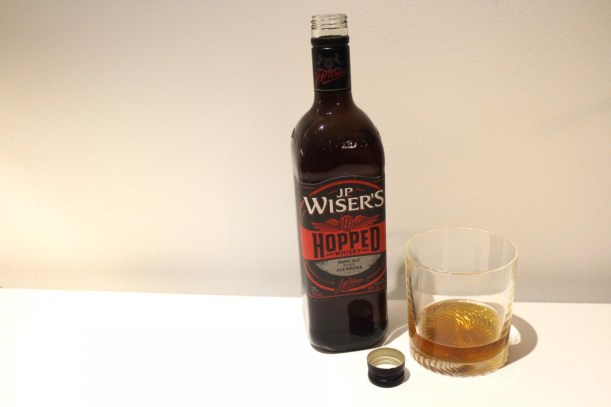
Enter JP Wiser’s Hopped.

Made with a blend of five- to nine-year-old Canadian whiskies, JP Wiser’s Hopped Whisky is “dry hopped” at the end of its aging process—a technique borrowed from brewing wherein dried hops are essentially steeped in the beer, imparting the juicy aromatics of hops without as much of the bitterness that’s obtained from hops in the boil.

Read the rest of this post over on Post City

The Toronto Distillery Co. is taking legal action against the LCBO

Toronto Distillery Company

The Toronto Distillery Co., a local maker of organic spirits, is in a fight with the LCBO about unpaid fees that could threaten the company’s existence.

The company is taking legal action against the LCBO because they say the LCBO is unfairly requiring them to pay taxes on booze they sell directly from their distillery; a tax that they say is “inconsistent with Canada’s constitution.”

Their argument stems from the Constitution Act of 1867 which states that all taxes in this country need to be legislated. That is, they need to be presented in the house (federal or provincial) and then voted on. As such, the Toronto Distillery Co. claims that current fees for onsite stores that are imposed on distilleries and created by the Ministry of Finance (and not voted on), are not consistent with this law.

The current fees related to booze sold onsite, The Toronto Distillery Co. alleges, are based on the same mark-up the LCBO uses on the booze they sell in their actual stores. That is to say, if a distillery opts to sell liquor from their own premises, they are forced to mark up their prices 140% and pay the LCBO a hefty fee. Continue reading “The Toronto Distillery Co. is taking legal action against the LCBO”

In Spirit: J.R.’s Dry Organic Canadian Gin by the Toronto Distillery Company

In Spirit is the new bi-weekly contribution I’ll be making to Post City’s website. The name of the column was chosen from a short list of other horrendous “spirit” based puns and the idea is that, every other week, I’ll open a bottle of something and write about it. For this, my first entry, I wanted to write about a local Toronto distillery. If you’ve got ideas for overlooked, undervalued, rare, or just plain tasty booze worthy of look for my future posts, please send me an email with your suggestions! And watch out for my future editions. Cheers.  

TorontoDistillGin-53738dcc

The term “gin” is really something of a catch-all.

A scan of the entry for gin in any thorough bartender’s guide will show you that there’s a lot more to the clear spirit than you might have first assumed.

There are four different legal definitions of gin in the European Union alone and a handful of ways you might make a product that can be called gin, including pot-distilled gin, or column-distilled gin, or the lesser “compound gin.” Really, the only thing all gins have in common is that they use juniper berries and some other combination of botanicals to flavour what begins as a neutral spirit. The botanicals a distiller uses are essentially what makes any gin taste different than any other and ingredients as diverse as grapefruit rind, cinnamon, dragon eye (yes, that’s a thing), orris root, and saffron might be used to flavour the stuff. Even the way these botanicals are added varies greatly from one gin to the next. Bombay Sapphire, for example, is distilled using a “gin basket” whereby a selection of botanicals are placed in a basket in the path of distilled alcohol vapour, and in so doing, the vapour takes on the flavours of the botanicals. Beefeater gin uses botanicals that are steeped in the base spirit for a day, like tea, and then filtered and redistilled.

Most people, sucking down G&Ts at the cottage or unwinding with an ice cold post-work martini, probably don’t appreciate the complexity and variety of what’s in their glass.

But then Jess Razaqpur isn’t like most people.

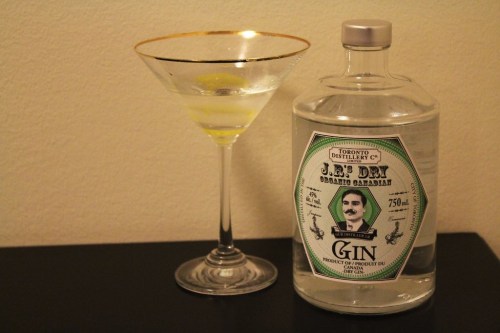
Having co-founded the Toronto Distillery Co. in the Junction with his high school friend Charles Benoit, Razaqpur is a self-confessed “gin guy.” And so while the company business has thus far been largely devoted to the production and marketing of their unaged organic whisky, it’s clear Razaqpur is excited for the launch of “J.R.’s Dry Organic Canadian Gin.”

And yes, that really is him on the label.

Read the rest of this post over on Post City…

Scotchy scotch scotch: Tasting the Balvenie line-up

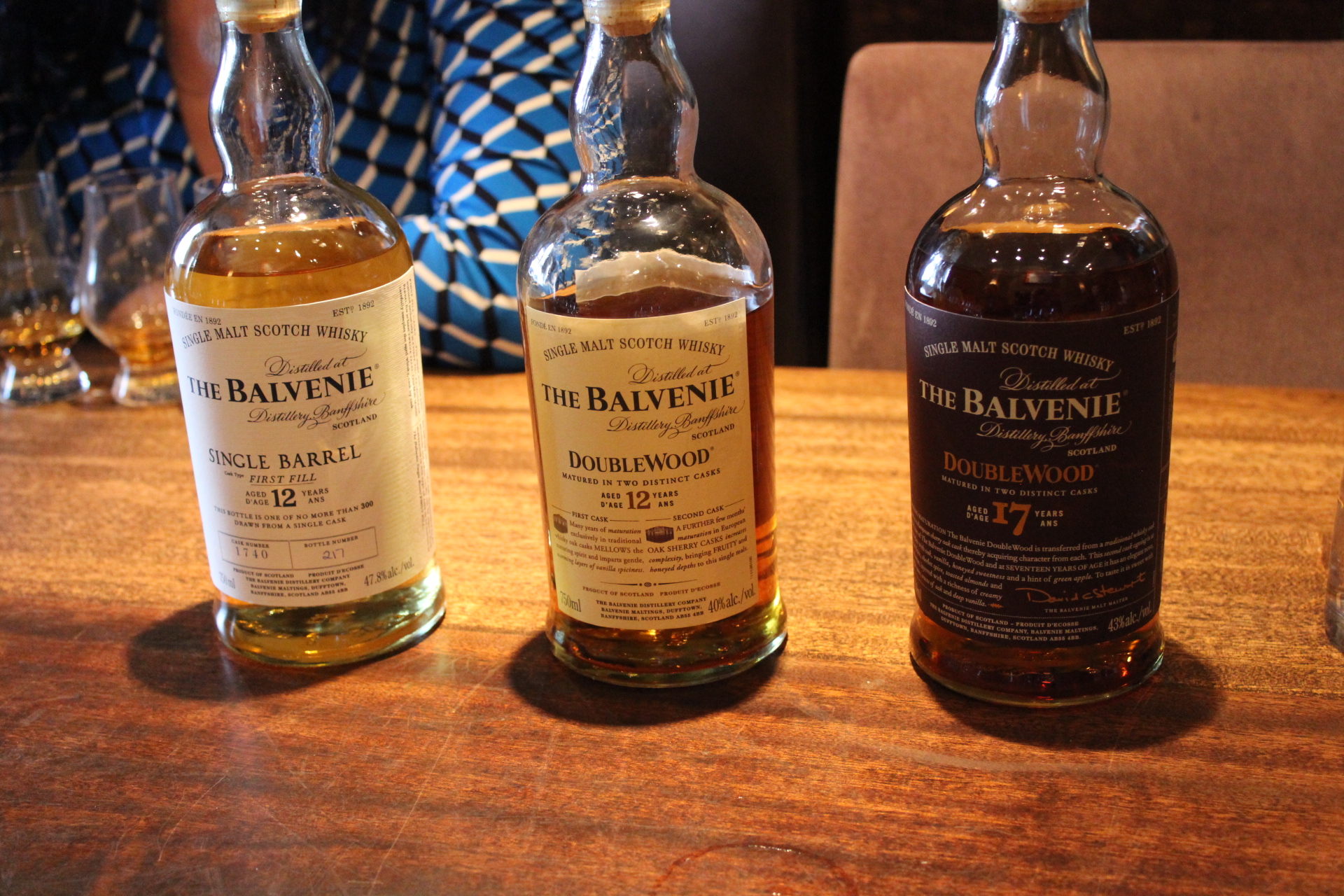
Three Balvenies

Unlike my discovery of craft beer, which can pretty handily be traced to the time I started writing about beer and has therefore been well documented, I’m not exactly sure how or when I started to like scotch.

Perhaps it’s true that a taste for scotch is something that you simply develop as you get older because without even noticing it over the years, I seem to have gone from someone who didn’t drink scotch, to someone who has a relatively decent assortment of the stuff.

Continue reading “Scotchy scotch scotch: Tasting the Balvenie line-up”

It’s OK to love the LCBO

Summerhill LCBO
(Image: Sina Gorge)

Frequently, when I write articles about the province’s retail alcohol industry (i.e. my slew of recent Beer Store rants), I receive supportive comments in response along the lines of “Hear, hear! The Beer Store and the LCBO need to go!” or “Yes! The time for TBS and LCBO is over,” and while I appreciate your support, I encourage you to read my articles in a little more detail, please.

I never said I wanted to dismantle or sell the LCBO and I think it would be insane to lobby for such a change.

In fact, I love the LCBO.

It’s probably one of my favourite stores and rivals only bookstores for its ability to consume far more of my time and money than I anticipated every time I walk into one. And, while I share some of your concerns related to the way the LCBO conducts its business, if you’re lobbying to get rid of the LCBO, you need to give your fucking head a shake. Continue reading “It’s OK to love the LCBO”

Local listomania!

Hey dudes,

In case you’re wondering where I’ve been (Shh, I like to pretend there are people that frequently check my blog hoping for new content), I’ve been focusing my beer-and-booze-related writing efforts over on blogTO, a site where I actually get paid a little bit to write.

In case you missed it (Shh, I like to pretend there are people who actually click the links I share on twitter and facebook), I’ve written a few list-focused posts for blogTO as of late, and the result is that, if you’ve been paying attention, you’ve now got all your Ontario beverage options covered for a while.

So I have provided the linked images below in order to cover all your local-drinking and Ben Johnson-reading needs until I have some time to devote to Ben’s Beer Blog again; but that might be a while because I’m currently working on a number of–you guessed it–list-focused posts for blogTO. Continue reading “Local listomania!”

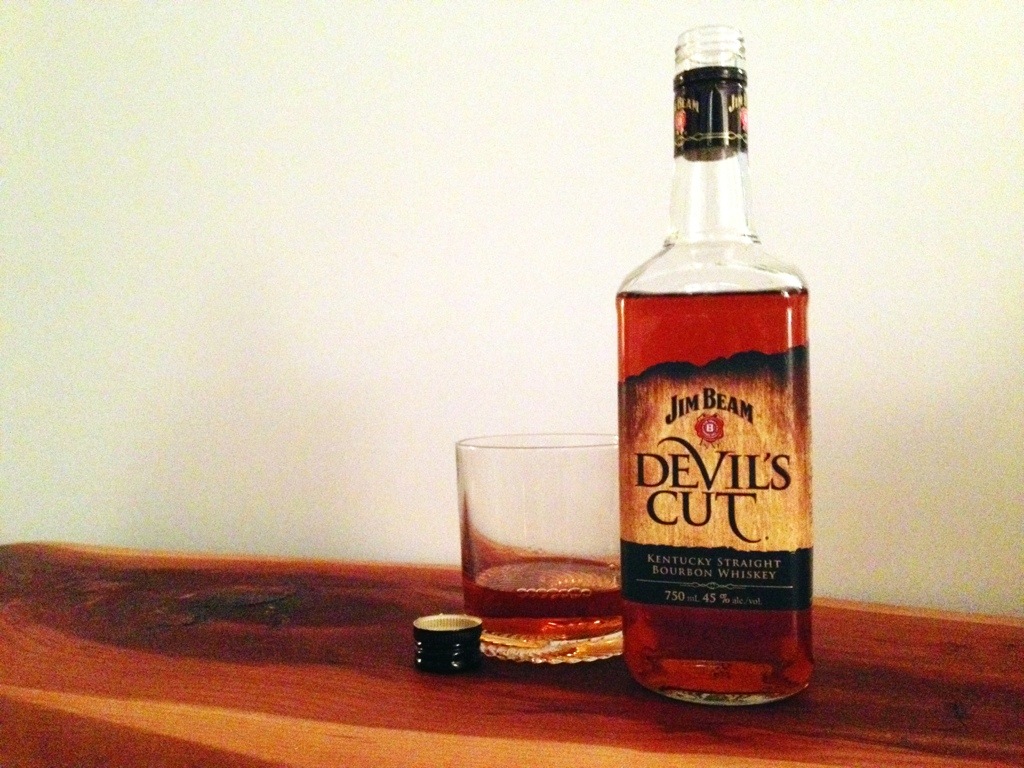
The Devil’s Cut

20131024-114609.jpg

Most people who know a thing or two about distilling have heard of the “angel’s share,” the term given to that small portion of spirits or wine that is lost to evaporation during the barrel-aging process.

Few however, have likely heard of the “devil’s cut” a term being given to the portion of spirits that’s absorbed by the barrel the spirit is aged in.

Now, almost certainly, so few have heard this term because it’s a clever marketing term invented by the folks at Jim Beam, the largest whisky distributor in the world–but nevertheless, it’s an intriguing concept (hey, I’m as savvy as the next big-brand cynic but a cool gimmick is a cool gimmick–especially if it has “devil” in its name!).

Thankfully, the very folks who invented a term for that booze that’s lost to the barrel have also “developed a proprietary process that actually pulls the rich whiskey trapped inside the barrels’ wood after they’re emptied.”

What luck! Continue reading “The Devil’s Cut”